
Article Plan: Printable Leather Bag Pattern PDF Free (as of 12/11/2025 06:42:46)
This article details readily available, cost-free resources for printable leather bag patterns in PDF format, focusing on sites like Babylon Leather and Reddit’s r/Leathercraft.
We’ll explore various bag types achievable with these patterns, alongside essential tools and materials needed for successful leathercraft projects.
Understanding pattern PDFs, scaling, and transfer techniques will also be covered, with a nod to advanced options like the Hannah Bag pattern.
The allure of DIY leathercraft is surging in popularity, offering a creative outlet and personalized accessories. Printable PDF patterns provide accessible entry, eliminating initial costs.
This article concentrates on locating free resources, empowering beginners and enthusiasts to craft beautiful leather bags without substantial financial investment.
Discover how to download and utilize these patterns, unlocking a world of handmade possibilities, from simple satchels to stylish crossbody bags.
The Growing Popularity of DIY Leathercraft
Leathercraft is experiencing a significant resurgence in popularity, driven by a desire for unique, handmade goods and a growing maker movement. Individuals are increasingly seeking alternatives to mass-produced items, embracing the satisfaction of creating something tangible with their own hands.
This trend is fueled by online communities and readily available resources, making leatherworking more accessible than ever before. The appeal extends beyond functionality; leather possesses a timeless aesthetic and durability that resonates with many. Furthermore, crafting allows for personalization, enabling creators to tailor designs to their specific tastes and needs.
The availability of free PDF patterns, like those found on Babylon Leather and shared within Reddit’s r/Leathercraft, significantly lowers the barrier to entry, attracting newcomers to the craft. This accessibility is a key factor in the continued growth of the DIY leathercraft community.
Why Choose a Printable PDF Pattern?
Printable PDF patterns offer unparalleled convenience and cost-effectiveness for leathercraft enthusiasts. Unlike traditional paper patterns, PDFs can be downloaded instantly, eliminating shipping costs and wait times; This digital format allows for easy scaling, accommodating different leather sizes or desired bag dimensions.
The ability to print patterns on demand means you only create what you need, reducing waste and storage requirements. PDFs are also easily backed up, safeguarding your investment against loss or damage. Furthermore, many free patterns are available online, such as those from Babylon Leather and Makesupply.com, making it an accessible starting point.
Digital patterns also facilitate easy tracing onto leather, ensuring accurate cutting and assembly, crucial for a professional finish.
Scope of this Article: Focusing on Free Resources
We will highlight platforms like Makesupply.com, noting their blend of free and premium options. The intention is to empower beginners and budget-conscious crafters with access to quality patterns. Discussions of hardware costs and potential supplementary expenses will be brief, as the core emphasis remains on free pattern acquisition.
Where to Find Free Leather Bag Patterns
Discover free leather bag patterns at Babylon Leather, Reddit’s r/Leathercraft, and Makesupply.com, offering diverse designs for various skill levels and projects.
Babylon Leather: A Key Resource
Babylon Leather stands out as a premier destination for DIY leather crafters seeking high-quality, free patterns. They specifically offer a digital leather bag pattern in PDF format, designed for both beginners and experienced artisans.
This pattern allows users to print, cut, and directly trace onto first-layer cowhide, ensuring accuracy and minimizing material waste. The resource is particularly valuable for small studios or individuals starting their leatherworking journey.
Babylon Leather’s commitment to providing accessible resources makes it a cornerstone of the free leather pattern community, empowering creators to build beautiful and functional leather bags without significant upfront investment. Their patterns are designed with clarity and ease of use in mind.
Reddit’s r/Leathercraft Community
The r/Leathercraft subreddit serves as a vibrant hub for leatherworking enthusiasts, frequently sharing valuable resources, including free patterns. A recent post highlighted a request for free bag patterns suitable for beginners, acknowledging the financial barrier to entry for newcomers.
Community members readily responded, directing the user to Makesupply.com as a source for a simple map case/satchel pattern available as a free PDF build-along tutorial. This demonstrates the collaborative spirit of the subreddit.
Reddit’s r/Leathercraft offers a dynamic platform for pattern discovery, troubleshooting, and gaining inspiration from fellow crafters, making it an invaluable resource beyond just downloadable files.
Makesupply.com: Free & Paid Options
Makesupply.com presents a diverse catalog of leathercraft patterns, encompassing both free and premium options for bag makers. Notably, they offer a “DIY Simple Map Case Satchel” pattern as a free PDF download, accompanied by a helpful build-along video tutorial – ideal for beginners.
Beyond the free offerings, Makesupply boasts an extensive collection of paid patterns, including designs for various bag styles and skill levels. Their catalog features 275 PDF leather patterns and 13 wallet patterns as of the current date.
The site provides a structured approach to pattern acquisition, allowing users to browse and purchase designs tailored to their specific project needs, offering both convenience and quality.
Types of Leather Bags You Can Make with Free Patterns
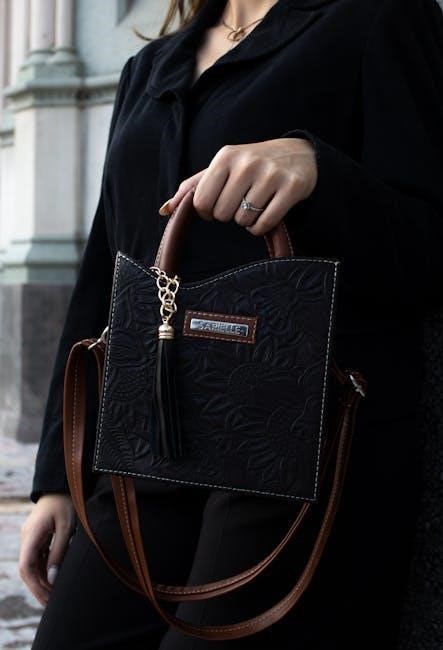
Free patterns enable crafting simple map cases, practical crossbody bags, and versatile drawstring bags. These projects are excellent starting points for novice leatherworkers.
Simple Map Case/Satchel Patterns
For beginners, the simple map case or satchel pattern represents an ideal entry point into leather bag making. Makesupply.com offers a free PDF build-along video tutorial for a DIY simple map case, providing step-by-step guidance.
These patterns typically involve fewer complex cuts and stitching techniques, focusing on rectangular shapes and straightforward construction. This makes them less intimidating for those new to working with leather.
The resulting bag is incredibly practical, suitable for carrying documents, tablets, or small essentials. Often, these designs feature a flap closure secured with a buckle or strap, adding a touch of classic style.
Utilizing readily available materials and tools, a map case or satchel can be completed relatively quickly, offering a rewarding first project and building confidence for more ambitious endeavors.
Crossbody Bag Patterns
While dedicated free crossbody bag patterns are less abundant than simpler designs, resourceful crafters can adapt existing patterns or find options within online communities. Reddit’s r/Leathercraft often features shared patterns or requests for similar designs, potentially yielding useful leads.
Crossbody bags generally require a bit more skill, involving curved cuts and potentially more complex strap attachment. However, the practicality and style of a finished crossbody bag make the effort worthwhile.
Look for patterns that offer clear instructions on strap length adjustment and comfortable wear. Consider designs with internal pockets or dividers for enhanced organization.
Adapting a satchel pattern by lengthening the strap can also create a functional crossbody style. Careful planning and precise cutting are crucial for a well-balanced and aesthetically pleasing final product.
Drawstring Bag Patterns
Drawstring bags represent an excellent starting point for beginner leathercrafters seeking free printable PDF patterns. Their relatively simple construction minimizes complexity, focusing on fundamental skills like cutting, stitching, and hole punching.
Makesupply.com offers a free PDF build-along tutorial for a simple drawstring bag, providing step-by-step guidance ideal for newcomers. Babylon Leather may also feature adaptable patterns suitable for creating drawstring closures.

These patterns typically involve rectangular leather pieces joined together to form a pouch, with cord or leather strips used for the drawstring closure.
Experiment with different leather types and embellishments to personalize your drawstring bag. Consider adding a lining for increased durability and a more refined finish. They are versatile and perfect for small items!
Essential Tools & Materials for Leather Bag Making
Successful leather bag creation demands specific tools: cutting implements, stitching supplies, and quality leather like cowhide. Groovers and needles are also vital for professional results.
Leather Selection: Cowhide & Other Options

Choosing the right leather is paramount for durability and aesthetics. Cowhide, particularly first-layer cowhide as highlighted by Babylon Leather, is frequently recommended for beginners due to its workability and strength. It readily accepts tooling and stitching, making it ideal for patterns downloaded in PDF format.
However, other leather types exist. Vegetable-tanned leather offers excellent shaping capabilities, while chrome-tanned leather is softer and more pliable. Consider the bag’s intended use; a heavier-duty bag benefits from thicker, more robust cowhide.

Pattern instructions may specify a leather weight or temper. Always prioritize quality leather to ensure a lasting, beautiful finished product. Experimenting with different finishes and colors can personalize your creations.
Cutting Tools: Rotary Cutters, Knives
Precise cutting is crucial when working with leather from printable PDF patterns. Rotary cutters, used with a self-healing mat, offer clean, accurate cuts, especially for straight lines and curves. They are favored for efficiency and consistency, minimizing waste.
However, a sharp utility knife or specialized leather knife is also essential. These allow for intricate cuts and detailing that a rotary cutter might struggle with. Always use a fresh blade for optimal results and safety.
Investing in quality cutting tools will significantly improve your leathercraft experience. Remember to prioritize safety and use appropriate protective gear, like cut-resistant gloves, during the cutting process.
Stitching Tools: Needles, Thread, Groovers
Hand stitching is a cornerstone of leathercraft, requiring specialized tools. Leather needles, with their distinctive blunt tips, are designed to pierce leather without tearing it. A variety of sizes are available, depending on the leather thickness and thread weight.
Waxed polyester or nylon thread is preferred for its strength and durability. Choosing the right thread color complements your leather and design. A groover creates a channel for the stitching, protecting it from abrasion and providing a professional finish.
Pricking irons or stitching chisels mark consistent stitch spacing. These tools, combined with patience, yield strong and aesthetically pleasing seams.

Understanding Leather Bag Pattern PDFs
Successfully utilizing free PDF patterns requires understanding instructions, scaling if needed, and accurately transferring the design onto your chosen leather material for precise cutting.
Reading Pattern Instructions

Carefully reviewing the pattern instructions is paramount before commencing any leatherwork. Free PDF patterns, like those from Babylon Leather or found on Makesupply.com, often include detailed diagrams and step-by-step guides. Pay close attention to seam allowances, required hardware (buckles, rivets, zippers), and the specific leather weight recommended.
Understanding terminology is crucial; terms like “skiving” or “edge beveling” might be used. Many patterns also specify the grain direction of the leather, impacting the bag’s durability and appearance. Don’t hesitate to re-read sections or search online for clarification on unfamiliar techniques. A thorough understanding upfront minimizes errors and ensures a satisfying final product. Ignoring instructions can lead to ill-fitting bags or structural weaknesses.

Scaling Patterns (If Necessary)
Occasionally, a downloaded PDF leather bag pattern may require scaling to achieve your desired final size. This is especially relevant if the pattern wasn’t originally designed for your preferred bag dimensions. Utilize your PDF viewer’s scaling options, ensuring you maintain the pattern’s proportions.
Before printing, perform a test print of a small section with a ruler to verify accuracy. Incorrect scaling can drastically alter the bag’s functionality and aesthetics. Be mindful of the percentage increase or decrease applied; even a slight error can accumulate. Always print at 100% unless a specific adjustment is needed, and double-check measurements post-printing before cutting any leather.
Transferring Patterns to Leather
Accurately transferring the printed PDF pattern onto your chosen leather is crucial for a successful project. Trace the pattern pieces onto the leather using a stylus, awl, or specialized leather marking pen – avoid ballpoint pens, as they can bleed. Ensure the grain direction of the leather aligns with the pattern instructions for optimal strength and drape.
For precise cuts, consider using a sharp rotary cutter or a dedicated leather knife. Always cut slightly outside the traced line, allowing for minor adjustments. Double-check pattern piece orientation before cutting to avoid mirrored errors. Carefully remove the paper pattern after tracing, preparing the leather for the next stage.

Advanced Pattern Sources & Considerations
Beyond free options, explore wallet and small goods patterns for skill-building. The Hannah Bag PDF is a popular example, but remember to factor in hardware costs.
Exploring Wallets & Other Small Goods Patterns
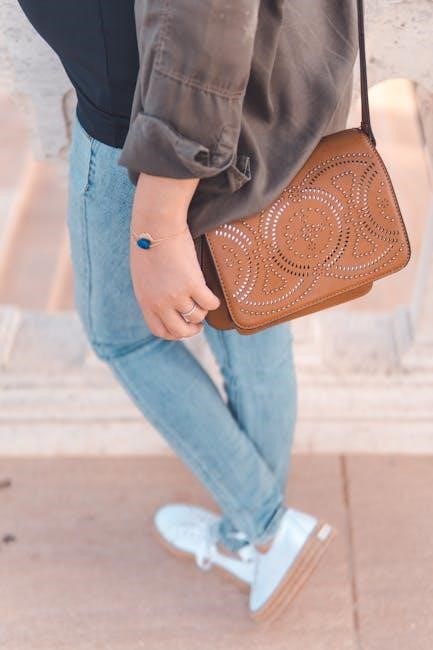
Venturing into smaller leathercraft projects, like wallets, serves as excellent practice before tackling larger bags. Numerous free PDF patterns exist for bi-fold and cardholder wallets, allowing you to hone your cutting, stitching, and finishing techniques.
These patterns often require less leather, reducing material costs, and offer quicker project completion for immediate gratification. Mastering basic wallet construction builds a foundational understanding of leather behavior and pattern interpretation.
Websites offering these smaller patterns frequently include detailed instructions and helpful video tutorials. Makesupply.com, for instance, provides a selection of both free and paid wallet patterns alongside bag designs. This gradual progression from simple to complex projects enhances your overall leathercraft skillset, preparing you for more ambitious bag-making endeavors.
Hannah Bag PDF Pattern (Mention as an example)
The Hannah Bag PDF pattern represents a popular, though not free, option demonstrating the level of detail available in paid patterns. While this article focuses on free resources, understanding what premium patterns offer is valuable.
The Hannah Bag pattern typically includes comprehensive instructions, detailed diagrams, and precisely drafted pattern pieces, often resulting in a professional-looking finished product. It showcases features like specific hardware requirements and detailed stitching guides.
Considering the cost of materials – leather, thread, rivets, and buckles – a paid pattern like the Hannah Bag can be a worthwhile investment. It provides a structured learning experience and minimizes potential errors. However, exploring free patterns first allows you to assess your skills and preferences before committing to a purchase.
Potential Costs Beyond the Pattern (Hardware, etc.)
While free PDF patterns eliminate the initial pattern cost, successful leather bag creation involves additional expenses. Hardware is a significant factor – buckles, clasps, rivets, rings, and zippers all contribute to the final price. These components can range from inexpensive to quite costly, depending on material and quality.
Leather itself is a primary expense, with prices varying based on type, thickness, and size. Thread, edge paint, and leather conditioner are also necessary. Don’t forget specialized tools like edge bevelers or hole punches, which may require an initial investment.
Budgeting for these supplementary materials is crucial; a seemingly “free” pattern can quickly become expensive. Careful planning and sourcing affordable hardware can help manage overall project costs.